Showing posts with label blues piano. Show all posts

Friday, August 15, 2014

Charles Brown - Driftin' Blues (The Best Of) (Full Album)

I love going back and looking at the wonderful blues musicians of the past, man the gems that you can find. Consider one Charles Brown, a master bluesman in my mind.  While some others may be better known, few can say they were as good.

Mr. Brown had a big mellow tone, and his piano work was top notch.  This album shows how influential he was.  You can hear the evolution of the blues in some of the songs that were covered by others.

As always, love the music, support the music, buy the music. Driftin Blues: Best of


Notes from YouTube;

Extremely underrated Blues man and hard to find album. He's known for the songs "Black Night" and "Driftin' Blues" both on this record. 

1. Driftin' Blues 0:00
2. Homesick Blues 3:16
3. Get Yourself Another Fool 6:28
4. In The Evening When The Sun Goes Down 9:32
5. A Long Time 12:30
6. It's Nothing 16:05
7. Trouble Blues 18:57
8. My Baby's Gone 21:21
9. Black Night 24:23
10. I'll Always Be In Love With You 27:32
11. Seven Long Days 30:29
12. Hard Times 33:33
13. Evening Shadows 36:44
14. I Lost Everything 39:31
15. Lonesome Feeling 42:31
16. Cryin' Mercy 45:29
17. I've Been Saving My Love For You 48:13
18. Fool's Paradise 50:12
19. Please Don't Drive Me Away 53:00
20. Merry Christmas Baby 55:23


Monday, January 02, 2012

Blues Books: Playtime Jazz & Blues


Paperback: 24 pages
Publisher: Hal Leonard Corporation (May 1, 2011)
Language: English
ISBN-10: 1616770449
ISBN-13: 978-1616770440
Product Dimensions: 11.6 x 8.9 x 0.2 inches

Here is a great book that will help you learn to play Jazz and blues piano.


Monday, May 03, 2010

Sunday, January 31, 2010

It's the Birthday of Roosevelt Sykes

Roosevelt Sykes was born on January 31, in 1906 in Elmar, Arkansas. And he passed way on July 17, 1983. He is one of my favorite blues piano players, because of his upbeat style.

Roosevelt Sykes singing "Gulfport Boogie"


Roosevelt Sykes @Amazon.com


Monday, December 21, 2009

Hadda Brooks "Society Boogie"

You know as I watch these old records of my favorite musicians like, in this case Hadda Brooks (The Queen of Boogie) I find it hard to believe that we actually at one time got all our music this way. It almost seems inconceivable to me now. And what adds to the strangeness of this feeling I have, is the fact that I'm not some young kid who never own a record player.

Maybe it was all those years of listening to 45s that make me feel this way.

Call me crazy and please enjoy this cut of Hadda Brooks playing "Society Boogie".


Hadda Brooks @Amazon.com

Hadda Brooks @Wikipedia


Saturday, December 12, 2009

Hadda Brooks "Hadda's Boogie"

Here is a YouTube video of a 78 rpm recording of Hadda Brooks performing her boogie-woogie song "Hadda's Boogie"


Friday, April 10, 2009

Friday Blues Funny - Sugar Chile Robinson

I love the clips of Sugar Chile Robinson, he was so cute playing those low down boogie woogie songs. Makes me laugh everytime.


Sugarchile Robinson
Frank Sugarchile Robinson
click image to CD@Amazon.com


Reference;

FRANK ‘SUGAR CHILE’ ROBINSON@Black Kettle Productions.

Frank 'Sugar Chile' Robinson@IMDB.

Frank Robinson (psychologist and musician)@Wikipedia

Frank Sugar Chile Robinson @SqueezeMyLemon


Friday, October 10, 2008

Friday Blues Funny - Boogie Woogie Baby Boy

This video clip made me laugh and I hope you all enjoy it too.

It is from the 1946 Movie; No Leave No Love. Frank "Sugarchile" Robinson is the kid playing the piano.


Notes from YouTube; One such was that tiny bundle of Detroit dynamite, "Sugar Chile" Robinson. Born Frankie Robinson, the youngest of six children, in Detroit in 1940, "Sugar Chile" began pounding on the family piano as a toddler - he reputedly banged out a recognisable version of Erskine Hawkins' Tuxedo Junction at the age of two - and by 1945 he had been "discovered" by pianist and bandleader Frankie Carle. Within a year he was asked to play at a Whitehouse party for President Harry Truman, had guested with Lionel Hampton's Orchestra and even appeared performing the title song in the 1946 MGM romantic comedy film "No Leave, No Love".

It was not until July 1949, however, that he made his first records for the Capitol label, when, in the consummate company of jazz veterans Leonard Bibbs on bass and drummer Zutty Singleton, Robinson took his first two releases into the Billboard R&B chart in late 1949; Numbers Boogie made it to number four, while Caldonia (What Makes Your Big Head So Hard) only reached number 14. His subsequent national tour broke box-office records eve rywhere and it is claimed that his appearance at Chicago's Regal Theatre remains the biggest one-week attraction of the theatre's entire history, easily beating the jazz royalty of the day like Count Basie and Duke Ellington. Robinson toured with Basie in 1950 and made a celebrated musical short with the Basie Sextet and Billie Holiday in Hollywood in August to showcase his hits.

The Christmas season of 1950 witnessed Sugar Chile's first European release and Christmas Boogie c/w Rudolph The Red-Nosed Reindeer sold well enough to spark a European tour in 1951, including rave reviews for his spot at the London Palladium. He was a big hit on US radio and TV all through 1951 and then, while still in his pre-teens, Robinson's career was suddenly over; his last single release was issued in August 1952, shortly followed by a 10" compilation LP of boogie woogie that featured many of his 1952 recordings.

Apart from a few radio transcriptions and film soundtracks, "Sugar Chile" Robinson's complete recording career - a period of just under three years - has been reissued in its entirety on one 2003 CD compilation, "Chronological Classics 1949-52". If he really was only nine years old at the time, the performances from his first session such as Vooey, Vooey Vay, Caldonia and Numbers Boogie were quite astonishing. As with other child stars, like Toni Harper, Robinson was frequently burdened with immature material, but even nursery rhyme knock-offs such as Sticks And Stones, Christmas Boogie and (Rock-A-Bye) Baby Blues were transformed into entertaining performances with hip and clever touches. The youngster acquitted himself as a pianist exceptionally well on the few instrumentals, particularly Lazy Boy's Boogie, and for variety he occasionally switched to organ or celeste on later sessions.

From Wikipedia; Robinson continued to tour Europe and America until the mid-1950s when he opted to pursue an academic career. He earned a Ph.D. in psychology from the University of Michigan. Remaining in musical obscurity throughout the latter 20th century, he surfaced in the early 2000s, and has made a comeback with the help of the American Music Research Foundation.

Sugarchile Robinson
Frank Sugarchile Robinson
click image to CD@Amazon.com


Reference;

FRANK ‘SUGAR CHILE’ ROBINSON@Black Kettle Productions.

Frank 'Sugar Chile' Robinson@IMDB.

Frank Robinson (psychologist and musician)@Wikipedia


Thursday, August 14, 2008

Boogie-Woogie

Boogie-Woogie is also one of my favorite forms of the blues. According to Wikipedia;

Boogie-woogie is a style of piano-based blues that became very popular in the late 1930s and early 1940s, but originated much earlier, and was extended from piano, to three pianos at once, guitar, big band, and country and western music, and even gospel. Whilst the blues traditionally depicts sadness and sorrow, boogie-woogie is associated with dancing. The lyrics of one of the very earliest, "Pinetop's Boogie Woogie", consist entirely of instructions to dancers:
Now, when I tell you to hold it, I don't want you to move a thing. And when I tell you to get it, I want you to Boogie Woogie!
It is characterized by a regular bass figure, an ostinato and the most familiar example of shifts of level, in the left hand which elaborates on each chord, and trills and decorations from the right hand.

The origin of the term boogie-woogie is unknown, according to Webster's Third New International Dictionary. The Oxford English Dictionary states that the word is a redoubling of boogie, which was used for rent parties as early as 1913. The term is often hyphenated. Blues historian Robert Palmer wrote that the boogie-woogie style bass pattern may have been created in the logging and turpentine camps and oil boomtowns of Texas, Louisiana, and the Mississippi Delta circa 1900. Palmer also reports that Willie Dixon told Karl Gert zur Heide, author of "Deep South Piano" that in Mississippi before the term boogie was used, the eight to the bar piano patterns were called "Dudlow Joes".

In an interview with NPR blues singer and pianist Marcia Ball stated that "Boogie woogie started out with a bunch of different names, depending on where you were. Apparently there was a song by a guy named Dudlow, Joe Dudlow. He’s the first guy that a lot of them heard that was playing that kind of um… [playing]. And so they called it that for a while, Dudlow Joe." The precise origin of boogie-woogie piano is, however, uncertain; it was no doubt influenced by early rough music played in honky tonks in the Southern United States. W.C. Handy and Jelly Roll Morton both mentioned hearing pianists playing this style before 1910. According to Clarence Williams, the style was started by Texas pianist George W. Thomas. Thomas published one of the earliest pieces of sheet music with the boogie-woogie bassline, "New Orleans Hop Scop Blues" in 1916, although Williams recalled hearing him play the number before 1911. The term "boogie" itself was in use very early, as in Wilbur Sweatman's "Boogie Rag" recorded in April, 1917. link


For more info click blues piano @ SqueezeMyLemon.

List of Boogie Woogie Musicians @ Wikipedia.


Tuesday, April 01, 2008

Blues Piano Day 7 - Champion Jack Dupree

I was going to post a video of Bukka White playing some Boogie Woogie, because I think it is such a cool video.

Then I thought about posting this blues piano video (1), this one (2), this one(3), this one (4) and this one (5). And if you watch them all I am sure you will enjoy them.

But then I came across a video of a bluesman, whose music I truly love. It's funny to me that I did not think of Champion Jack Dupree when I thought of doing a week of post on the blues piano.

I guess it is true what they say about your memory being the second thing to go.

Champion Jack Dupree with King Curtis


Champion Jack Dupree


I like Mr. Dupree so much because he was a true man of Louisiana (and a man of the world too), his speech, his diction, his style, his rhythm and of course his musical skills all spring from his youth in Louisiana. And that may be why I did not think of of him at first. I have included too many bluesmen from Louisiana in my list of blues piano players I fear, but what can I say. It was not only Mr. Dupree's piano playing that attracted me to his music. I really like how he sings and talks. He had a way with words. Consider these quotations;

  • "When you open up a piano, you see freedom. Nobody can play the white keys and don't play the black keys. You got to mix all these keys together to make harmony. And that's what the whole world needs: Harmony."

  • "Nasty Boogie Woogie" by Jack Dupree
    Mama bought a chicken, she took him for a duck
    Laid him on the table with his legs stuck up
    Yonder come the children with a spoon and a glass
    Catch the gravy droppin' from his yes, yes, yes

  • "Death of Martin Luther King", recorded just after his assassination
    I know you people, I know you glad you ain't one of me
    I know you people glad, I know you glad you white and free
    Oh yeah, white and free, oh, what will, what will become of me?
    Oh I am begging, yes, I'm begging to be free.

Champion Jack Dupree mp3 posted @ This Recording Blog
The Life I Lead - the mp3 file is down the page.

reference;

Champion Jack Dupree @ Wikipedia

Illustrated Champion Jack Dupree discography

Wikipedia's List of Piano blues musicians

Champion Jack Dupree search @ YouTube


Monday, March 31, 2008

Blues Piano Day 6 - Albert Ammons

Albert Ammons


There is a whole lot of tickling of those ivories going on in this video of Albert Ammons (left) and Pete Johnson (right). These guys really rip it up. This almost reminds me of classical music in the virtuoso piano playing that these cats display.

Boogie Woogie Dream


Read all about Albert Ammons here;

Albert Ammons @ Wikipedia

Albert Ammons @ JazzPolice.com


Saturday, March 29, 2008

Blues Piano Day 5 - Professor Longhair

Professor Longhair is another Louisiana raised blues piano man. They called him the professor because he was not only a wizard of the keyboard but influenced many of those who have come after him.

The Rock and Roll Hall of fame says;

Henry Roeland “Roy” Byrd - better known to the world as Professor Longhair or “Fess,” for short - stands as the foremost exponent of New Orleans piano style. Byrd’s idiosyncratic style is a rhythmic jambalaya reflecting the freewheeling, good-time spirit of the Crescent City. Professor Longhair soaked up influences from close-at-hand sources - barrelhouse boogie-woogie, Caribbean rhythms like the rumba (many of his relatives were West Indian), and the Crescent City’s “second line” parade rhythms - but the way he pieced these elements together is what made his style such a marvel of fluidity and drive.


Professor Longhair's Tipitina


Professor Longhair - Documentary(Japanese language)


In the word of others;
  • "The best thing that ever happened to the piano in New Orleans." James Booker

  • "Professor Longhair put 'funk' into music; he's the father of the stuff." Dr. John

  • "The Picasso of keyboard funk." Said by a New Orleans musician in an article during the 1990's, perhaps Dr. John or Art Neville.

  • "He's the Satchel Paige of the piano." Albert Goldman

  • "He's the Bach of rock." Allen Toussaint

  • "He's a seminal force, a guru, an original creator of the New Orleans piano style ... the teacher of great players like Fats Domino, Allen Toussaint, Mac Rebbenack, James Booker, and Huey Smith. All acknowledge him as The Great Master." Jerry Wexler


Links to blogs hosting Professor Longhair mp3s;

Big Chief mp3 @ Sous les paves, la plage...

Tipitina mp3 @ Visions and Revisions Blog

References;

Professor Longhair.com

Professor Longhair @ Wikipedia

Professor Longhair @ Myspace


Friday, March 28, 2008

Blues Piano Day 4 - Marcia Ball

Marcia Ball


I really like Marcia Ball's sound and style. She was born in Texas (I don't hold that against her) but she was raised in Louisiana, and it shows. What with the way she handles a keyboard, is there any question?

The way Wikipedia puts it;
Ball is known for her piano style, which shows elements of zydeco, swamp blues, Louisiana blues and boogie woogie. Most of her most well-known recordings were released on Rounder Records in the 1980s and early 1990s. She was inducted into the Austin Music Hall of Fame in 1990.
In the video below, I like the little talk she gives the audience.

MARCIA BALL ON THE MOUNTAIN


Marcia Ball: Play with your Poodle


references;

Marcia Ball @ MySpace

Marcia Ball @ Wikipedia

Marcia Ball's Official Website

Marcia Ball @ About.com Watch for the pop-up but they do have an mp3 at the end of the article.


Wednesday, March 26, 2008

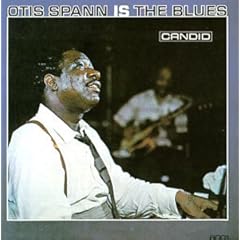
Blues Piano Day 3 - Otis Spann

Another award winning blues piano player, and a man who did as much as anybody to help create the Chicago blues sound is Otis Spann.

According to LivinBlues;

A measure of recognition and respect in which Spann is held took place at a ceremony held at the 1972 Ann Arbor Blues and Jazz Festival, when Muddy Waters presented Spann's widow, Lucille, with a plaque which read: 'The people of Ann Arbor Michigan in recognition of the talent, the genius of the late Otis Spann, sweet giant of the Blues, formally dedicate the Ann Arbor Blues and Jazz Festival, 1972 in the grounds upon which it stands to the memory of this great artist.' That September the performance area where the plaque was placed became known as The Otis Spann Memorial Field and remained so for the ensuing years of the festival. Probably best remembered for the much needed subtle and complementary support he provided for Muddy Waters music, both on stage and in the recording studio. Otis Spann was inducted into the Blues Foundation's Hall of Fame in 1980.
LivinBlues also has a couple of Otis Spann mp3s for your listening pleasure.

Otis Spann - T'Aint Nobody's Business If I Do


Otis Spann - Blues Don`t Love Nobody


References;

Otis Spann @ YouTube

Otis Spann @ LivinBlues

Otis Spann @ Wikipedia


Tuesday, March 25, 2008

Blues Piano Day 2 - Pinetop Perkins

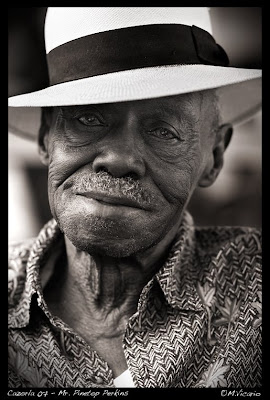
Pinetop Perkins
Photo by Manuel Vicari


Can't really have a blues piano week if you don't have some Pinetop Perkins, now can you? I think the bio on his official website says it all;

Pinetop Perkins is one of the last great Mississippi bluesmen still performing. He began playing blues around 1927 and is widely regarded as one of the best blues pianists. He’s created a style of playing that has influenced three generations of piano players and will continue to be the yardstick by which great blues pianists are measured.

I like the video below, because it it shows where Mr. Perkins is in his life. I really like the end where he says, "Well I'm trying to make it, 93 years young and I'm still trying to make it." Now that is the blues, I hope I'm still trying to make it in my ninities. Mr. Perkins will be 95 this comming July 7th, God willing.


Notes from YouTube; Pinetop Perkins and Anthony Sapienza perform Pinetop's hit "Kansas City" the day after Pinetop's gig at B.B. King's Blues Club in NYC. November 2006. Pinetop will be featured in a cover story in the December 2006 issue of Seventh Hour Blues, available at www.seventhhourblues.com

Mr. Perkins is an award winning blues piano player;

In 2005 he was also presented with a lifetime achievement award at the Grammy’s. In 2000 he received a National Heritage Fellowship from the National Endowment of the Arts. He has been featured in the documentary Piano Blues directed by Clint Eastwood for the Martin Scorsese PBS series, The Blues. In addition, he continued to win the Blues Music Award for best blues piano every year until 2003 when he was retired from that award, which now bears his name--the Pinetop Perkins Piano Player of the Year.

References;

Pinetop Perkins Official Web Site

Pintop Perkins @ MySpace

Pintop Perkins @ Wikipedia


Monday, March 24, 2008

Blues Piano - Day 1 - Some examples

OK, to keep this interesting I want to cover blues Piano this week. I am partial to the harmonica because I paly that instrument, but I envy piano players becasue in my mind they have real skills. Not that us harmonica players do not, but the piano has so much more to offer and the best piano blues players are real showmen.

According to Piano Blues@About.com

The piano has earned an honored place in the history of the Blues. Though not as popular or convenient as a guitar or harmonica, the piano has carved out a deep tradition in America's music. Why the piano? Why not the trumpet, violin, tuba, or other traditional musical instruments that were available throughout the evolution of the Blues. Let's take a look at history of Blues piano.
A great point made in this article is "W.C. Handy made his name as the "Father of the Blues" by transcribing Blues music for the world to then learn." Facts like this help us to really understand what the blues have become over the years. That is why I want to explore each instrument one by one.

This article also covers the various blues piano styles. Please click links to see a YouTube video of the give style.

Ragtime - Scott Joplin - Stoptime Rag

Stride - Jelly Roll Morton - Hesitation Blues

Boogie Woogie - Albert Ammons - swanee river boogie

Chicago Style - Otis Spann - T'Aint Nobody's Business If I Do

West Coast - Merry Christmas Baby - Charles Brown blues

New Orleans - Make This World A Better Place


Sunday, July 16, 2006

Champion Jack Dupree mp3

You know a bluesman that I have wanted write about for a while now is Champion Jack Dupree. He is one of my favorite musicians from my home state of Louisiana. Now I know it might seem like I say things like that about so many different musicians, but you have to understand that when you are from Louisiana, there is always a great musician hanging around just waiting to be loved. Not to mention the great Louisiana musicians from the past.

Like Louis Armstrong he was a student at the New Orleans Home for Colored Waifs, where he learned how to play the piano. He was born in July of the early 1900s (different sources give different dates) and he died January 21, 1992. He lived such a colorful life that to my mind not only did he live the blues but he lived many other colors as well. He was a master boogie woogie barrelhouse house piano player, but he also served in the United States Navy as a cook. He was captured during WWII and even served some time as a Japanese Prisoner of War. He got his nickname Champion Jack because after meeting Joe Lewis he went on to become a Golden Gloves Boxing Champion.

You can read all about Champion Jack Dupree@ wikipedia.

He once said,

"When you open up a piano, you see freedom. Nobody can play the white keys and don't play the black keys. You got to mix all these keys together to make harmony. And that's what the whole world needs: Harmony."

Champion Jack Dupree - Hometown New Orleans.mp3

I love during this recording when he ask rhetorically, "People say, what is barrelhouse piano playing anyway?" and then he proceeds to show you. Good stuff indeed.

file under;
, ,