Showing posts with label Boogie-Woogie. Show all posts

Sunday, June 13, 2010

Candye Kane


Listened to Candye Kane play two hours of blues and Boogie Woogie music out doors in Chula Vista, CA today. She was accompanied by Sue Palmer on piano and Laura Chavez on guitar. They were fabulous as always, made for a nice laid back Sunday even listening to blues music.

Amazon.com says of her;

A former stripper and men's magazine model who also did the occasional X-rated video shoot back in the '80s, Candye Kane would be the blues version of the Andrea True Connection, but for one vitally important fact: this woman can really sing! An updated version of Bessie Smith with a wicked sense of humor and a gleefully omnisexual persona, Candye Kane and her backup band the Swingin' Armadillos aren't just a novelty act, but a sassy, smart, and always-entertaining mix of sex, showbiz, and swing.


Candye Kane @Amazon.com


Wednesday, January 06, 2010

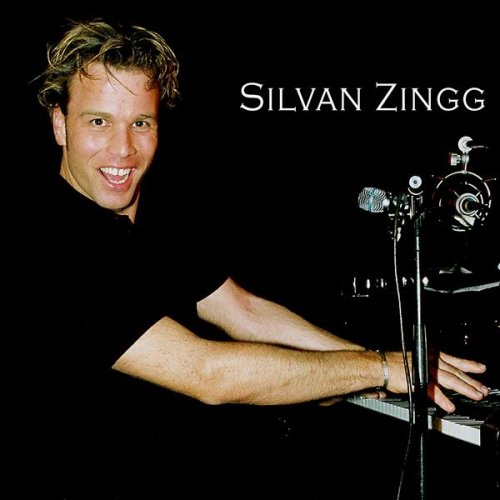
Dancin' The Boogie - Silvan Zingg, Will & Maéva

I love boogie-woogie because it is kind of a happier part of the blues. All the energy and dynamics that the blues can bring are found in Silvan Zingg's music. He has a mastery of the boogie-woogie beat that is very smooth and refined, and he also holds on to that emotionally compelling part of good blues music.

When I watch the dance video clip below I can't keep my feet from moving. And the fact that I have "boogie-woogie dance envy" also known as "BWDE" becomes obvious to anyone near me.

Dancin' The Boogie - Silvan Zingg, Will & Maéva


Dancin' the Boogie
Dancin' the Boogie by Silvan Zingg
click image to download mp3 album


Monday, December 21, 2009

Hadda Brooks "Society Boogie"

You know as I watch these old records of my favorite musicians like, in this case Hadda Brooks (The Queen of Boogie) I find it hard to believe that we actually at one time got all our music this way. It almost seems inconceivable to me now. And what adds to the strangeness of this feeling I have, is the fact that I'm not some young kid who never own a record player.

Maybe it was all those years of listening to 45s that make me feel this way.

Call me crazy and please enjoy this cut of Hadda Brooks playing "Society Boogie".


Hadda Brooks @Amazon.com

Hadda Brooks @Wikipedia


Saturday, December 12, 2009

Hadda Brooks "Hadda's Boogie"

Here is a YouTube video of a 78 rpm recording of Hadda Brooks performing her boogie-woogie song "Hadda's Boogie"


Thursday, December 10, 2009

Hadda Brooks Queen of the Boogie

Hadda Brooks "Queen of the Boogie" performing "That's My Desire".

I first saw Ms. Brooks during a performance of hers at the PB (Pacific Beach) Street Fair here in San Diego. I was grooving so much to her music that she picked me out of the audience and called me up to the stage and serenaded me.

Her flair, charm, skill at playing boogie woogie and sense of humor won over the crowd of young twenty something beach going crowd that day. No small feat, for a lady of her age.

I got to meet her after her set and she was vary gracious, and signed her autograph for me.

I often think of her and her wonderful music.


Notes from YouTube: Lovely romantic song from 1947 by singer/pianist Hadda Brooks.

The guitarist on this recording is Teddy Bunn, a superb guitar player who was playing Rock and Roll in the 1930's.

Hadda Brooks @Amazon.com

Hadda Brooks @Wikipedia


Friday, April 10, 2009

Friday Blues Funny - Sugar Chile Robinson

I love the clips of Sugar Chile Robinson, he was so cute playing those low down boogie woogie songs. Makes me laugh everytime.


Sugarchile Robinson
Frank Sugarchile Robinson
click image to CD@Amazon.com


Reference;

FRANK ‘SUGAR CHILE’ ROBINSON@Black Kettle Productions.

Frank 'Sugar Chile' Robinson@IMDB.

Frank Robinson (psychologist and musician)@Wikipedia

Frank Sugar Chile Robinson @SqueezeMyLemon


Monday, January 05, 2009

Dancin' The Boogie - Silvan Zingg, Will & Maéva

I love boogie-woogie because it is kind of a happier part of the blues. All the energy and dynamics that the blues can bring are found in Silvan Zingg's music. He has a mastery of the boogie-woogie beat that is very smooth and refined, and he also holds on to that emotionally compelling part of good blues music.

When I watch the dance video clip below I can't keep my feet from moving. And the fact that I have "boogie-woogie dance envy" also known as "BWDE" becomes obvious to anyone near me.

Dancin' The Boogie - Silvan Zingg, Will & Maéva


Dancin' the Boogie
Dancin' the Boogie by Silvan Zingg
click image to download mp3 album


Wednesday, October 29, 2008

Boogie Woogie History Videos

Boogie Woogie History- Albert Ammons,Pete Johnson,Meade Lux Lewis


Boogie Woogie History Part II


Friday, October 10, 2008

Friday Blues Funny - Boogie Woogie Baby Boy

This video clip made me laugh and I hope you all enjoy it too.

It is from the 1946 Movie; No Leave No Love. Frank "Sugarchile" Robinson is the kid playing the piano.


Notes from YouTube; One such was that tiny bundle of Detroit dynamite, "Sugar Chile" Robinson. Born Frankie Robinson, the youngest of six children, in Detroit in 1940, "Sugar Chile" began pounding on the family piano as a toddler - he reputedly banged out a recognisable version of Erskine Hawkins' Tuxedo Junction at the age of two - and by 1945 he had been "discovered" by pianist and bandleader Frankie Carle. Within a year he was asked to play at a Whitehouse party for President Harry Truman, had guested with Lionel Hampton's Orchestra and even appeared performing the title song in the 1946 MGM romantic comedy film "No Leave, No Love".

It was not until July 1949, however, that he made his first records for the Capitol label, when, in the consummate company of jazz veterans Leonard Bibbs on bass and drummer Zutty Singleton, Robinson took his first two releases into the Billboard R&B chart in late 1949; Numbers Boogie made it to number four, while Caldonia (What Makes Your Big Head So Hard) only reached number 14. His subsequent national tour broke box-office records eve rywhere and it is claimed that his appearance at Chicago's Regal Theatre remains the biggest one-week attraction of the theatre's entire history, easily beating the jazz royalty of the day like Count Basie and Duke Ellington. Robinson toured with Basie in 1950 and made a celebrated musical short with the Basie Sextet and Billie Holiday in Hollywood in August to showcase his hits.

The Christmas season of 1950 witnessed Sugar Chile's first European release and Christmas Boogie c/w Rudolph The Red-Nosed Reindeer sold well enough to spark a European tour in 1951, including rave reviews for his spot at the London Palladium. He was a big hit on US radio and TV all through 1951 and then, while still in his pre-teens, Robinson's career was suddenly over; his last single release was issued in August 1952, shortly followed by a 10" compilation LP of boogie woogie that featured many of his 1952 recordings.

Apart from a few radio transcriptions and film soundtracks, "Sugar Chile" Robinson's complete recording career - a period of just under three years - has been reissued in its entirety on one 2003 CD compilation, "Chronological Classics 1949-52". If he really was only nine years old at the time, the performances from his first session such as Vooey, Vooey Vay, Caldonia and Numbers Boogie were quite astonishing. As with other child stars, like Toni Harper, Robinson was frequently burdened with immature material, but even nursery rhyme knock-offs such as Sticks And Stones, Christmas Boogie and (Rock-A-Bye) Baby Blues were transformed into entertaining performances with hip and clever touches. The youngster acquitted himself as a pianist exceptionally well on the few instrumentals, particularly Lazy Boy's Boogie, and for variety he occasionally switched to organ or celeste on later sessions.

From Wikipedia; Robinson continued to tour Europe and America until the mid-1950s when he opted to pursue an academic career. He earned a Ph.D. in psychology from the University of Michigan. Remaining in musical obscurity throughout the latter 20th century, he surfaced in the early 2000s, and has made a comeback with the help of the American Music Research Foundation.

Sugarchile Robinson
Frank Sugarchile Robinson
click image to CD@Amazon.com


Reference;

FRANK ‘SUGAR CHILE’ ROBINSON@Black Kettle Productions.

Frank 'Sugar Chile' Robinson@IMDB.

Frank Robinson (psychologist and musician)@Wikipedia


Tuesday, September 23, 2008

It's the Birthday of Albert Ammons

Albert Ammons was born on September 23 in 1907, and he passed away on December 2, 1949. He was the king of boogie-woogie which swept the United States from the late 1930s into the mid 1940s, and is still popular today.

Albert Ammons playing "Shout for Joy"


Thursday, August 14, 2008

Boogie-Woogie

Boogie-Woogie is also one of my favorite forms of the blues. According to Wikipedia;

Boogie-woogie is a style of piano-based blues that became very popular in the late 1930s and early 1940s, but originated much earlier, and was extended from piano, to three pianos at once, guitar, big band, and country and western music, and even gospel. Whilst the blues traditionally depicts sadness and sorrow, boogie-woogie is associated with dancing. The lyrics of one of the very earliest, "Pinetop's Boogie Woogie", consist entirely of instructions to dancers:
Now, when I tell you to hold it, I don't want you to move a thing. And when I tell you to get it, I want you to Boogie Woogie!
It is characterized by a regular bass figure, an ostinato and the most familiar example of shifts of level, in the left hand which elaborates on each chord, and trills and decorations from the right hand.

The origin of the term boogie-woogie is unknown, according to Webster's Third New International Dictionary. The Oxford English Dictionary states that the word is a redoubling of boogie, which was used for rent parties as early as 1913. The term is often hyphenated. Blues historian Robert Palmer wrote that the boogie-woogie style bass pattern may have been created in the logging and turpentine camps and oil boomtowns of Texas, Louisiana, and the Mississippi Delta circa 1900. Palmer also reports that Willie Dixon told Karl Gert zur Heide, author of "Deep South Piano" that in Mississippi before the term boogie was used, the eight to the bar piano patterns were called "Dudlow Joes".

In an interview with NPR blues singer and pianist Marcia Ball stated that "Boogie woogie started out with a bunch of different names, depending on where you were. Apparently there was a song by a guy named Dudlow, Joe Dudlow. He’s the first guy that a lot of them heard that was playing that kind of um… [playing]. And so they called it that for a while, Dudlow Joe." The precise origin of boogie-woogie piano is, however, uncertain; it was no doubt influenced by early rough music played in honky tonks in the Southern United States. W.C. Handy and Jelly Roll Morton both mentioned hearing pianists playing this style before 1910. According to Clarence Williams, the style was started by Texas pianist George W. Thomas. Thomas published one of the earliest pieces of sheet music with the boogie-woogie bassline, "New Orleans Hop Scop Blues" in 1916, although Williams recalled hearing him play the number before 1911. The term "boogie" itself was in use very early, as in Wilbur Sweatman's "Boogie Rag" recorded in April, 1917. link


For more info click blues piano @ SqueezeMyLemon.

List of Boogie Woogie Musicians @ Wikipedia.


Monday, March 31, 2008

Blues Piano Day 6 - Albert Ammons

Albert Ammons


There is a whole lot of tickling of those ivories going on in this video of Albert Ammons (left) and Pete Johnson (right). These guys really rip it up. This almost reminds me of classical music in the virtuoso piano playing that these cats display.

Boogie Woogie Dream


Read all about Albert Ammons here;

Albert Ammons @ Wikipedia

Albert Ammons @ JazzPolice.com


Monday, March 24, 2008

Blues Piano - Day 1 - Some examples

OK, to keep this interesting I want to cover blues Piano this week. I am partial to the harmonica because I paly that instrument, but I envy piano players becasue in my mind they have real skills. Not that us harmonica players do not, but the piano has so much more to offer and the best piano blues players are real showmen.

According to Piano Blues@About.com

The piano has earned an honored place in the history of the Blues. Though not as popular or convenient as a guitar or harmonica, the piano has carved out a deep tradition in America's music. Why the piano? Why not the trumpet, violin, tuba, or other traditional musical instruments that were available throughout the evolution of the Blues. Let's take a look at history of Blues piano.
A great point made in this article is "W.C. Handy made his name as the "Father of the Blues" by transcribing Blues music for the world to then learn." Facts like this help us to really understand what the blues have become over the years. That is why I want to explore each instrument one by one.

This article also covers the various blues piano styles. Please click links to see a YouTube video of the give style.

Ragtime - Scott Joplin - Stoptime Rag

Stride - Jelly Roll Morton - Hesitation Blues

Boogie Woogie - Albert Ammons - swanee river boogie

Chicago Style - Otis Spann - T'Aint Nobody's Business If I Do

West Coast - Merry Christmas Baby - Charles Brown blues

New Orleans - Make This World A Better Place