Showing posts with label blues terminology. Show all posts

Thursday, April 15, 2010

Blues Word of the Day - Balling the Jack

ball(ing) the jack

1 - origin: balling the jack is a phrase from the jargon of railroadsmen in the beginning of this century in America and simply means going at top speed (highballing). The "jack" is the locomotive and "ballin'" means to work fast or get rollin'. Balling the jack (and variants like balling or having a ball) later acquired other, non-railroad related meanings like having a wild good time (drinking), to move quickly, going flat out, dancing, having sex and in gambling circles of risking everything on a single throw of the dice or turn of a card and in general use risking everything on one attempt or effort.
Following visitor contributed information confirms these meanings:

2 - metaphor for having sex, see also balling the jack and grinding. Dave Vanderslice says: "Means literally: use a jack hammer, but also to have sex." Thanks to Dave Vanderslice for his contribution to the list;

3 - name of a once popular dance, dancestep. Gray "Grayotis" Martin writes: "Ball the Jack---also likely a juke joint dance, with a reference to the act of sexual intercourse. "Ball" in verb form, is a slang word for sex, in white and black lingo. Thanks to Gray Martin for this contribution;
Southern Louisiana's John "JohnnyB" Bradford says: "The "eagle rock" and "ball and the jack" are 1940's dance moves. Thanks to John "JohnnyB" Bradford for this contribution to the list;

This phrase can be found in:
Bessie Smith, Baby Doll & St. Louis Blues, Big Bill Broonzy, I Feel So Good


Notes from YouTube;

Brenda Lee covered Ballin' the Jack on her first album entitled "Grandma, What Great Songs You Sang!" (Later renamed "Brenda Lee Sings Songs Everybody Knows") . She was a Judy Garland fan and I suspect this cover came about because the song was in "For me and My Gal" (1942) starring Judy Garland and Gene Kelly.

(J. Barris - C. Smith)

Well you put your two knees close up tight,
And then you swing them to the left
You swing them to the right.
Step around the floor kind of nice and light.
And then you twist around and
Twist around with all your might.
Shake your loving arms way out in space,
Then you do the Eagle Rock with the style and grace.
Swing your foot way round then you bring it back.
That's what I call Ballin' The Jack.

Well you put your two knees close up tight,
And then you swing them to the left
You swing them to the right.
Step around the floor kind of nice and light.
And then you twist around and
Twist around with all your might.
Shake your loving arms way out in space,
Then you do the Eagle Rock with the style and grace.
Swing your foot way round then you bring it back.
That's what I call Ballin' The Jack.

The song was written in 1913, before modern jazz. Its structure, however, lends itself to jazz, blues and pop adaptations. The lyric merely describes dance movements. Modern songs have used the term "ballin' the jack" in other contexts, including sexual, but originally it was just railroad repair term. A ball was jacked against a rail in order to straighten the rail. The original writers must have thought the phrase catchy enough to start a dance craze.


Saturday, March 27, 2010

Blues Word of the Day - Back Door Man

back door man/friend

1 - the lover of a married woman who sneaks out the back door before the man of the house gets home

This phrase can be found in:
Blind Boy Fuller, I Crave My Pigmeat, Howlin' Wolf, Back Door Man
Lightnin' Hopkins, Back Door Friend


Tuesday, March 16, 2010

Blues Word of the Day - Alcorub

alcorub

1 - Tom "Bassman" Bartenbach, Puebla, Mexico wrote: "Alcorub refers to rubbing alcohol for sore muscles and bones. However, this was also used to sniff, much as other, more destructive substances are used today. A way to get a high. This stuff tasted lousy when ingested, so they sniffed it instead. Thanks to Tom "Bassman" Bartenbach for this contribution;

2 - Willie Lomax wrote to me: "Alcorub refers to "rubbing alcohol" i.e. isopropyl alcohol. It is inexpensive, easily obtainable, and although it is a cumulative poison, some desperate alcoholics have been known to drink it - with adverse effects. Thanks to Willie Lomax for this contribution;

3 - Greg Gurtizen says: "I believe that alcorub was a "Patent Medicine" of the time that alcoholics would use when they couldn't get their sterno (canned heat) aka "squeeze". Thanks to Greg Gurtizen for this contribution.

This phrase can be found in: Tommy Johnson, Canned Heat Blues


Friday, March 27, 2009

Blues Word of the Day - Back door man / friend

back door man/friend

1 - the lover of a married woman who sneaks out the back door before the man of the house gets home

This phrase can be found in:
Blind Boy Fuller, I Crave My Pigmeat, Howlin' Wolf, Back Door Man
Lightnin' Hopkins, Back Door Friend


Tuesday, April 08, 2008

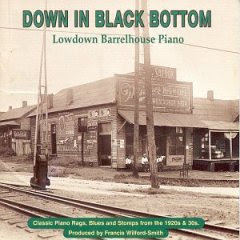
Blues Terminology: Barrelhouse

Barrelhouse


Barrelhouse

According to Mojohand's Glossary of the blues

A colloquial term, originating around the late 1800s, used specifically to refer to a bar that served liquor (especially whiskey) straight from the barrel, but more widely understood to mean any rough and rowdy drinking establishment. "Barrelhouse piano" is a distinct style that arose out of such establishments and is characterized by the highly percussive and loud style that was necessary to encourage dancing in such venues.

Barrelhouse


According to Wikipedia Barrelhouse can refer to:

  • A bar or saloon. Originates from the storage of barrels of alcohol.

  • An early form of jazz with wild, improvised piano, and an accented two-beat rhythm (see boogie-woogie).

  • A style of piano-playing associated with the above.


Tuesday, March 04, 2008

Blues Terminology: John The Conquer

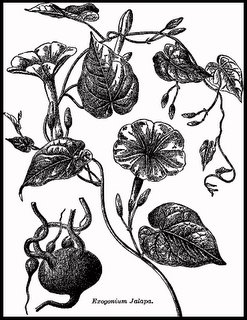
The roots Ipomoea jalapa, when dried, are carried as the John the Conquer root amulet.


This is a repost from Mar of 2006.

In 1954 Muddy Waters had a hit with the Willie Dixion song "Hoochie Coochie Man" and ever since I first heard this song I wondered what Muddy meant when he sang that line "I got the John the Conqueroo." It is part of the verse that goes;

I got a black cat bone, I got a mojo too,
I got the John the Conqueroo, I'm gonna mess with you,
I'm gonna make you girls, lead me by my hand,
Then the world will know, the Hoochie coochie Man.


According to Answers.com

"John the Conquer root, refers to a number of roots to which magical powers are ascribed in American folklore, especially among the hoodoo tradition of folk magic among African Americans. The root, in turn, is named after a folk hero called High John the Conqueror."

Who was John the Conqueror?

"John the Conqueror was supposed to be an African prince who was sold as a slave in the Americas. Despite his enslavement, his spirit was never broken and he survived in folklore as a sort of a trickster figure, because of the tricks he played to evade his masters. Zora Neale Hurston wrote of his adventures ("High John de Conquer") in her collection of folklore, "The Sanctified Church."

What is John the Conqueror?

"The root known as High John the Conqueror is (supposed to be) the root of Ipomoea jalapa, an Ipomoea species related to the morning glory and the sweet potato."


John The Conqueror @ Answers.com

John The Conqueror @ LuckyMojo.com

file under;
, ,


Thursday, March 09, 2006

Blues Terminology: John The Conquer

The roots Ipomoea jalapa, when dried, are carried as the John the Conquer root amulet.


In 1954 Muddy Waters had a hit with the Willie Dixion song "Hoochie Coochie Man" and ever since I first heard this song I wondered what Muddy meant when he sang that line "I got the John the Conqueroo." It is part of the verse that goes;

I got a black cat bone, I got a mojo too,
I got the John the Conqueroo, I'm gonna mess with you,
I'm gonna make you girls, lead me by my hand,
Then the world will know, the Hoochie coochie Man.


According to Answers.com

"John the Conquer root, refers to a number of roots to which magical powers are ascribed in American folklore, especially among the hoodoo tradition of folk magic among African Americans. The root, in turn, is named after a folk hero called High John the Conqueror."

Who was John the Conqueror?

"John the Conqueror was supposed to be an African prince who was sold as a slave in the Americas. Despite his enslavement, his spirit was never broken and he survived in folklore as a sort of a trickster figure, because of the tricks he played to evade his masters. Zora Neale Hurston wrote of his adventures ("High John de Conquer") in her collection of folklore, "The Sanctified Church."

What is John the Conqueror?

"The root known as High John the Conqueror is (supposed to be) the root of Ipomoea jalapa, an Ipomoea species related to the morning glory and the sweet potato."


John The Conqueror @ Answers.com

John The Conqueror @ LuckyMojo.com

file under;
, ,