Showing posts with label TMBTBM Series. Show all posts

Tuesday, June 16, 2009

The Men Behind The Bluesmen: Theresa Needham

I've enjoyed putting together this series that I call "The Men Behind The Bluesmen," but when I think about it, I'm wrong to call the series that. Because all the blues musicians are not men, and all those who support them and help promote their music are not men either.

Teresa Needham is an example of a woman who helped the bluse music and the musicians who made it during her life. Wikipedia says of her;

Theresa McLaurin Needham (April 17, 1912 - October 16, 1992) was an American tavern owner who became known as "the Godmother of the Chicago blues". She was posthumously inducted into the Blues Hall of Fame in 2001.

Born Theresa McLaurin in Meridian, Mississippi, she married Robert Needham and moved to Chicago in the 1940s. In 1949 she opened a basement club, Theresa's Lounge (sometimes also called T’s Basement), in an apartment building in South Indiana Avenue, in the South Side of Chicago. This attracted a predominantly black audience from the surrounding neighbourhood, but its appeal reached global proportions as a result of the calibre of music offered. It featured live entertainment with Junior Wells and Buddy Guy in the house band, and attracted touring musicians such as Muddy Waters, Little Walter, Otis Rush, Earl Hooker and Howlin' Wolf.

The club relocated in 1983 when the landlord refused to renew the lease, and closed permanently in 1986. Theresa Needham died in Chicago in 1992.


Theresa Needham Tribute page @www.chicagobarproject.com


Tuesday, June 09, 2009

The Men Behind The Bluesmen: Gene Nobles

Gene Nobles was born on August 3, 1913, in Hot Springs, Arkansas and he died on September 21, in 1989, in Nashville, Tennessee. He was an American radio disc jockey who became famous on Nashville radio station WLAC from the 1940s through the 1970s by playing rhythm and blues music. He is an inductee into the Blues Music Hall of Fame.

According to Wikipedia;

Nobles is credited with introducing artists such as Chuck Berry, Fats Domino, and Little Richard, to a wider audience. Before Nobles' breakthrough programming, R&B artists were heard usually by African-Americans only, who attended their performances at nightclubs on the so-called "Chitlin Circuit" and purchased their records in black-owned stores. Some conservative whites (especially segregationists) opposed the broadcast of such music, but many others purchased the R&B records and danced to them.

According to a book by Wes Smith, The Pied Pipers of Rock 'n' Roll: Radio Deejays of the 50s and 60s (Longstreet Press, 1989), Nobles had a reputation for gambling at horse tracks and drinking while on air. Neither of these vices appeared to cause him trouble with station management. In the early 1960s, Nobles drew complaints by listeners and FCC officials over a suggestive reference made while he read a commercial for White Rose Petroleum Jelly. Nobles regularly used double entendres between the records he played to accentuate his ironic, sarcastic sense of humor.


Famous Phrases

Nobles developed slang phrases which he used frequently. Some of the more famous included:

"Jerks/fillies" --boys/girls.
"From the heart of my bottom" --a suggestive inversion of the traditional testimony to sincerity.
"That's G-A-double L-A-T-I-N, folks" --spelling the name of the town where Randy's Record Shop was located in Tennessee


Books that Reference Gene Nobles

You Can Make It If You Try: The Ted Jarrett Story of R&B in Nashville

Spinning Blues into Gold: The Chess Brothers and the Legendary Chess Records


Tuesday, June 02, 2009

The Men Behind The Bluesmen: Jim ONeal

Jim O'Neal, who was born in 1948, is an American blues expert, writer, record producer and record company executive.

According to Wikipedia;

He co-founded America's first blues magazine, Living Blues, in Chicago in 1970. Since that time the magazine has set standards for blues history, culture, and journalism worldwide. O'Neal also co-founded Rooster Blues Records, and currently (2007) operates the Stackhouse label, with bases in Clarksdale, Mississippi, and Kansas City. He is co-editor of the book The Voice of the Blues: Classic Interviews from Living Blues Magazine (Routledge, 2002). O'Neal was inducted into the Blues Hall of Fame in 2002.
The Voice of the Blues : Classic Interviews from Living Blues Magazine by Jim ONeal


Tuesday, May 05, 2009

The Men Behind The Bluesmen: Lester Melrose

Lester Melrose was born on December 14, 1891 and he passed away on April 12, 1968. He was one of the first producers of blues records.

According to Wikipedia;

...a freelance A & R man, combining the roles of talent scout and record producer. He started to promote many blues artists who became popular, recording them mainly in Chicago. His first big success was "It's Tight Like That" with Tampa Red and soon-to-be gospel music legend Thomas A. Dorsey, then still known as Georgia Tom.

He worked for several record companies simultaneously in the 1930s, including RCA Victor and its subsidiary Bluebird records, Columbia records, and Okeh Records. Among the artists he recorded and brought to the world's attention were Joe "King" Oliver, Big Bill Broonzy, the first Sonny Boy Williamson, Memphis Minnie, Roosevelt Sykes, Lonnie Johnson, Big Joe Williams, Bukka White, Washboard Sam, Champion Jack Dupree, Jazz Gillum, Big Boy Crudup, Victoria Spivey and Leroy Carr.

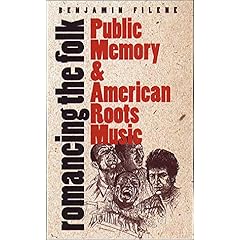
You can read about Lester Melrose and many of the early pioneers of blues music in the book below;
Romancing the Folk: Public Memory and American Roots Music (Cultural Studies of the United States)


musicians @SML who worked with Lester Melrose

Tampa Red,
Big Bill Broonzy ,
Sonny Boy Williamson,
Memphis Minnie,
Lonnie Johnson,
Victoria Spivey,
Leroy Carr,


Tuesday, April 28, 2009

The Men Behind The Bluesmen: Ralph Bass

According to Wikipedia;

Ralph Bass (May 1, 1911 – March 5, 1997), born in The Bronx, New York, was an influential Jewish American rhythm and blues (R&B) record producer and talent scout for several independent labels and was responsible for many hit records. He was a pioneer in bringing black music into the American mainstream. During his long career he worked for such labels as Black & White Records, Savoy Records, King Records, Federal Records and Chess Records, recording some of the greatest performers in black music, including Etta James, Sam Cooke, James Brown, Earl Bostic and groups such as The Platters and The Dominoes. By doing so, he was instrumental in helping to shape their careers. He was inducted into the Rock and Roll Hall of Fame in 1991 as a non performer, as well as the Blues Hall of Fame.

In the 1940s at Black and White Records Bass got his start as an A&R man. He produced and recorded, among others, Lena Horne, Roosevelt Sykes, Jack McVea (suggesting he record the hug hit "Open the Door, Richard") and T-Bone Walker, including T-Bone's landmark "Call It Stormy Monday".

In 1959, the Chess brothers hired Bass away from King Records in Cincinnati to serve as A&R Director at Chess Records. He was there until 1976, working with blues, gospel, R&B, and rock and roll artists, including Clara Ward, the Soul Stirrers, Etta James, Howlin' Wolf, Muddy Waters and Sonny Boy Williamson. Later, for MCA Records he produced John Lee Hooker.


Tuesday, April 21, 2009

The Men Behind The Bluesmen: Dave Bartholomew

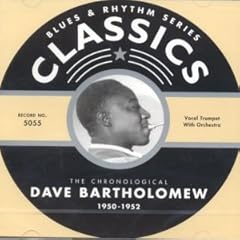
The Chronological
Dave Bartholomew: 1950-1952
The Chronological Dave Bartholomew: 1950-1952 by Dave Bartholomew
Dave Bartholomew was born on 24 December 1920, in Edgard, Louisiana. He was a musician, band leader, composer, and arranger, prominent in the music of New Orleans throughout the second half of the 20th century.

He is a member of the Songwriters Hall of Fame and the Rock and Roll Hall of Fame as well as the Blues Hall of Fame.


According to Wikipedia his legacy is;

Bartholomew helped develop and define the New Orleans sound which was so influential in the 1950s. He was key in the transition from jump blues and big-band swing to rhythm and blues and rock and roll.

Bartholomew and Domino co-wrote many songs that were hits, including "Ain't That a Shame", "I'm in Love Again" "Blue Monday" and "I'm Walkin'".

His "I Hear You Knocking" was a hit for Gale Storm in the 50's, and Dave Edmunds in the 70's; "One Night" and "Witchcraft" were both hits for Elvis Presley. Pat Boone's cover of "Ain’t That a Shame," and Rick Nelson's version of "I'm Walkin'" were top twenty hits in the late '50s and early '60s. Chuck Berry's only #1 Hot 100 hit was a cover of Bartholomew's "My Ding-a-Ling", although Berry substantially changed the arrangement and verses.

Bartholomew produced a series of memorable hits such as "Lawdy Miss Clawdy" with Lloyd Price; and "I Hear You Knocking" and "One Night" with Smiley Lewis; plus "Let the Good Times Roll" with Shirley & Lee.


Tuesday, April 07, 2009

The Men Behind the Bluesmen: Bill "Hoss" Allen

Today I want to introduce you to another one of "The Men Behind the Bluesmen" Bill "Hoss" Allen. Because of his work in radio he is a Blues Hall of Fame inductee.

According to Wikipedia;

Bill Allen (aka "Hossman" or "Hoss"; born William Trousdale Allen III, December 3, 1922, Gallatin, Tennessee; died February 25, 1997, Nashville, Tennessee) was an American radio disc jockey who attained fame from the 1950s through the 1990s for playing rhythm and blues and black gospel music on Nashville radio station WLAC.

Allen was the youngest of a quartet of disc jockeys known as "The 50,000 Watt Quartet." It included Gene Nobles, "John R." (Richbourg), and Herman Grizzard. Allen had the longest career of any. He worked for radio stations for 45 years before his 1993 retirement. Like Richbourg, from the 1960s through the 1980s, Allen was involved with Nashville's small but vibrant blues and gospel music scenes.

On Air Famous phrases

"All around, down for Royal Crown"--said during commercials for the hair-care product, used by some African-American youngsters in the 1950s and 1960s; product is still sold as of 2007
"Bless your heart"--Allen used this phrase constantly; derived from a traditional Southern religious greeting
"Camelot time"--informal name for his nightly shows
"Git down time"--phrase originally referred, in the mid 20th-century, to the beginning of prostitution activities at nightfall in places like Gallatin and Nashville; later became a teenage/African-American slang term for dancing, thanks to Allen's frequent use
"Just a touch ... means so DOG-GONE much!"--slogan for Royal Crown Hair Dressing and Pomade
"Well, hello, darlin', hello, darlin'"--Allen's standard greeting to begin his shows
"That's Randy, R-A-N-D-Y, Gallatin, G-A-L-L-A-T-I-N ... Gallatin, Tennessee!"--the closing catch phrase used on 60-second commercials for Randy's Record Shop, a sponsor of "The Hossman"'s (and also Gene Nobles') program for many years on WLAC
"...then YOU have a DISEASED SCALP! And now it's time to CURE UP that diseased scalp...you don't want no itchy head!"--another catch phrase used in the middle of a 60-second spot for a certain mail-order product used to treat psoriasis voiced by Hoss Allen. Commercials for mail-order products and services such as these were a frequent mainstay during his overnight gospel program.

The !!!! Beat: Legendary R&B and Soul Shows from 1966, Vol. 1There is a series of DVDs of Allen's 1966 TV show "The!!!Beat."
A fan at Amazon.com stated; "The !!!! Beat, which followed hot on the heels of The Night Train, the first all-black music television show, began production in January 1966, and was the brain-child of famed radio disc-jockey William "Hoss" Allen. The !!!! Beat did The Night Train one better; it was produced in full-color, and guest-starred a who's-who of national and regional stars from the world of Blues and R & B. The six-volume DVD series contains all 26 episodes, and was shot at WFAA in Dallas Texas, one of the few Southern stations to have color facilities at the time. Interestingly, all of the performers were recruited from one of four cities; Nashville, Dallas, Chicago or New Orleans. Most of the performers were managed by "Hoss" Allen or his associates."

Please click the above image for info on the six-volume DVD series

WLAC Radio: The Unofficial Webpage - station history


Tuesday, December 30, 2008

New Series: The Men Behind The Bluesmen

I like to give credit where credit is due. That's just how I roll. Some people mistakenly believe that the blues is a black or white thing. It is true that many of the great bluesmen were black, it is also a fact that there were many white men standing behind them encouraging them, enabling them, cajoling them, collaborating with them to create this great art form that we all love so much.

Any way, I just want to shed some light on the men who stood with the bluesmen. Who helped them become the giants that we know today. In the coming months I plan to cover their bios, books, music, and other contributions of the following in a series of post I'm calling "The Men Behind the Bluesmen."

Lenard Chess

Phil Chess

Sam Philips

Alan Lomax

Robert Palmer

And many, many others.