"The British ballads became a new kind of form in their hand. And out of them came the blues, a new kind of song of commentary and satire, a song form which, after all, has become the main musical form of the whole human species."
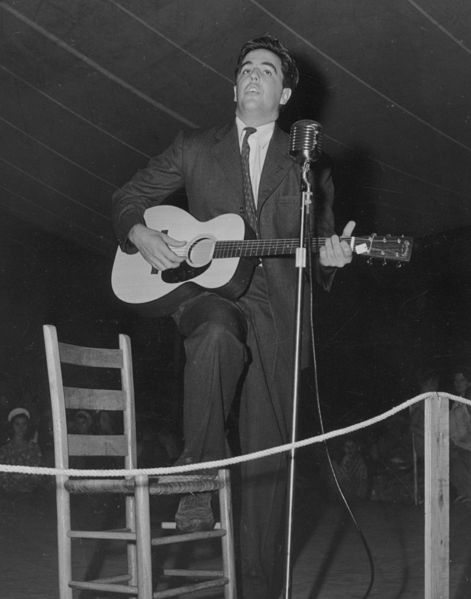
Alan Lomax (January 15, 1915 – July 19, 2002) was an American folklorist and musicologist. He was one of the great field collectors of folk music of the 20th century, recording thousands of songs in the United States, Great Britain, Ireland, the West Indies, Italy, and Spain.
Every time I think of Mr. Lomax, I thank God for him. He is one of the most important men in the world of blues as far as I am concerned.
Alan Lomax was born on January 15, in 1915 and he passed away on July 19, in 2002. He was an American folklorist and musicologist who did a great deal to help popularize blues music.
He was one of the great and best known field collectors of folk music of the 20th century. He and his father John Lomax, recorded thousands of songs in the United States, Great Britain, Ireland, the West Indies, Italy, and Spain.
According to Wikipedia;
A pioneering oral historian, he also recorded substantial interviews with many legendary folk musicians, including Woody Guthrie, Lead Belly, Muddy Waters, Jelly Roll Morton, Irish singer Margaret Barry, Scots ballad singer Jeannie Robertson, and Harry Cox of Norfolk, England, among many others. After the bombing of Pearl Harbor he took his recording machine into the streets to capture the reactions of everyday citizens. While serving in the army in World War II he made numerous radio programs in connection with the war effort. The 1944 "ballad opera," The Martins and the Coys, broadcast in Britain (but not the USA) by the BBC, featuring Burl Ives, Woody Guthrie, Will Geer, Sonny Terry, Pete Seeger, and Fiddlin' Arthur Smith, among others, was released on Rounder Records in 2000.
I remember the first time I heard the prison work song Ain't No More Cane it was one of those moments when blues music caused me great sadness.
I don't normally associate blues music with sadness, but this song takes me there. It might have been Leadbelly's delevery, but I thought about all those men who died working on prison work gangs.
Over the years there have been a few more upbeat treatments of the song, and some have really made it rock. Check these out;
Ain't no more cane on the Brazos(1)
Oh, oh, oh, oh...
Its all been ground down to molasses
Oh, oh- oh, oh- oh...
You shoulda been on the river in 1910 They were driving the women just like they drove the men.
Go down Old Hannah,(2) don'cha rise no more Don't you rise up til Judgment Day's for sure
Ain't no more cane on the Brazos Its all been ground down to molasses
Captain(3), don't you do me like you done poor old Shine Well ya drove that bully(4) til he went stone blind
Wake up on a lifetime(5), hold up your own head Well you may get a pardon and then you might drop dead
Ain't no more cane on the Brazos Its all been ground down to molasses.
[1] The Brazos is a river in Texas which features in many prison songs because it runs past virtually all of the old prisons in Texas. [2] Old Hannah is the name given to sun. [3] Captain is one of the ranks in the hierarchy of prison guards, the man in charge of half the workers in a field. Also used outside the prisons to mean the White boss. In some of the old slave songs the singers call Jesus their captain. I also think that this language carried over from the Civil War. [4] Bully: an inmate working in the line. The word can also be used as a verb, in which case it means working hard. [5] A Lifetime prison sentence.
Vera Hall is sampled here in Santic's version of Troubled so Hard. I think this is another example of the influence of gospel blues music on other forms of music. Many who are not familiar with the orgins of modern forms of music do not understand the debt that is owed to those who came before.
As an example of this, you can find many covers of Troubled so Hard on YouTube, but almost none of them mention MS. Hall or her contribution.
Vera Hall (1902-1964) - Born in 1902 in Payneville, Alabama, just outside of Livingston in Sumter County, Vera Hall grew up to establish one of the most stunning bodies of American folk music on record.
Hall married Nash Riddle, a coal miner, in 1917 and gave birth to their daughter, Minnie Ada. Riddle was killed in 1920. Though Hall sang her entire life, learning spirituals such as I Got the Home in the Rock and When Im Standing Wondering, Lord, Show Me the Way from her mother, Agnes, and her father, Efron Zully Hall, it was not until the late 1930s that Halls singing gained national exposure.
John Avery Lomax, ethnomusicologist, met Hall in the 1930s and recorded her for the Library of Congress. Lomax wrote that she had the loveliest voice [he] had ever recorded. The British Broadcasting System played Halls recording of Another Man Done Gone in 1943 as a sampling of American folk music. The Library of Congress played the song the same year in commemoration of the 75th Anniversary of the Emancipation Proclamation. In 1945, Hall recorded with Byron Arnold. In 1984, the recordings were released as a Collection of Folksongs entitled Cornbread Crumbled in Gravy.
In 1948, with the help of Alan Lomax, Hall traveled to New York and performed on May 15 at the American Music Festival at Columbia University. During the course of this trip, Lomax interviewed Hall on several occasions. In 1959, these interviews would be transformed into Rainbow Sign, a thinly- guised biography of Hall. In this book, Lomax stated, her singing is like a deep-voiced shepherds flute, mellow and pure in tone, yet always with hints of the lips and the pleasure-loving flesh... The sound comes from deep within her when she sings, from a source of gold and light, otherwise hidden, and falls directly upon your ear like sunlight. It is a liquid, full contralto, rich in low overtones; but it can leap directly into falsetto and play there as effortlessly as a bird in the wind.
Today, her work still garners attention. In 1999, techno-artist, Moby (Richard Melville Hall), included her voice and song Troubled So Hard in his multi-platinum album Play, thus introducing Halls voice to a whole new generation of listeners. Prized by scholars and folksong enthusiasts, Halls recordings include examples of early blues and folk songs that are found nowhere else. Her masterful renditions of traditional songs and stories are a defining part of Southern Black culture and the Black Belt region.
The below video is nice because it offers some pictures of Ms. Hall and allows you to put a face with the beautiful voice. I also like the raw nature of the sound, it reminds me of the hyms that my grandmother and great Aunts would hum and sing as they went about their business of life.
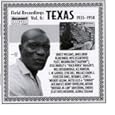
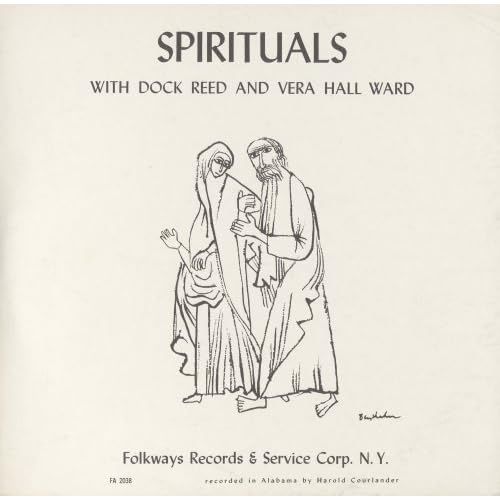
The above album is Alabama farm worker Dock Reed and his cousin Vera Hall Ward. Both were both recorded by Alan Lomax for the Library of Congress. Dock, by all accounts, was a deeply religious man who never sang secular music, while Vera was known to perform a few of these "sinful" songs. Please click on the image and listen to the samples mp3s of this wonderful gospel blues album.
Alan Lomax (January 15, 1915 – July 19, 2002) was an American folklorist and musicologist. He was one of the great field collectors of folk music of the 20th century, recording thousands of songs in the United States, Great Britain, Ireland, the West Indies, Italy, and Spain.
Every time I think of Mr. Lomax, I thank God for him. He is one of the most important men in the world of blues as far as I am concerned.
Alan Lomax (January 15, 1915 – July 19, 2002) was an American folklorist and musicologist. He was one of the great field collectors of folk music of the 20th century, recording thousands of songs in the United States, Great Britain, Ireland, the West Indies, Italy, and Spain.
Every time I think of Mr. Lomax, I thank God for him. He is one of the most important men in the world of blues as far as I am concerned.
Nuevayol Querido
-
When Bad Bunny played the SuperBowl last year, his hit NuevaYol (New York
in Spanish using the classic Puerto Rican pronunciation) brought me back to
my ti...
-
Had the chance to play with Rochester legend Joe Beard at our Son House
Blues night at the Record archive last month. What an honor to share the
stage w...
Motown Blues
-
VARIOUS ARTISTS | |
MOTOWN’S BLUES EVOLUTION
MOTOWN 31453-0613-2
LUTHER ALLISON
THE MOTOWN YEARS 1972-1976
MOTOWN 31453-0612-2
AMOS MILBURN :
THE MOTOWN...
MY NEW BLOG
-
Dear friends
I've started a new blog because here i reached the limit of pics i can
upload. Plus the blog started to be very heavy.
So, here ask ONLY for r...
Author Speaking Gig Coming Up
-
I'll be headed to Houston in a couple of hours to speak at Mystery Writers
of America Houston chapter's monthly luncheon. I feel totally honored by
the inv...
Ma Rainey: Mother of the Blues
-
“You like blues? I’ll give you the blues. Don’t call your mother for
another week, and I guarantee you’ll have the blues…” ~ my mom
After all these years...
ME & the DEVIL Blues Fest
-
Se viene un festival imperdible!!
Enterate de todo en:
Facebook: http://ow.ly/QAx5C
Twitter: http://ow.ly/QAxad
Google+: http://ow.ly/QAxdD
Instagram: h...
Bill Campbell: One Of The Under-Rated, imo.
-
Go here to peruse an elegantly composed outline of his profession. He is
pretty much as the title of this website section demonstrates, very nearly
shocki...
Janiva Magness CD Preview
-
[image: Janiva Magness' Original]Any year that you get a new Janiva Magness
CD is guaranteed to be a good one, so tighten your wigs and crank up the
ster...
Top 10 Foods for Healthy Hair
-
Better-looking hair can start at your next meal.
"Just like every other part of your body, the cells and processes that
support strong, vibrant hair depe...
Jeff Chandler: My Second Cousin Removed
-
by Dave the Spazz
“Don’t ever let them operate on your back. That’s how we lost Jeff
Chandler.”
--Don Van Vliet 1
Today’s Hanukkah’s Jew answers to the ...
Robert Johnson's Cross Road Blues
-
Essa é uma animação muito interessante que conta, de maneira resumida, a
história e os mitos por trás do ícone do blues, Robert Johnson. Desde o
início dur...
Hell’s Highway
-
Two tracks today from Charlie Burse & his Memphis Mudcats. Burse isn’t
known outside of his work with the Memphis Jug Band as a guitar player and
sometimes...
This blog has moved
-
This blog is now located at
http://uncensoredhistoryoftheblues.purplebeech.com/.
You will be automatically redirected in 30 seconds, or you may click here....
We have moved!
-
Our Site has moved! Enjoy all of this same content plus updated content,
posts, comments and more at http://www.tdblues.com. THIS SITE IS NO LONGER
UPDATE...
Tough times for Ottawa's homeless 'Blues Lady'
-
Click the title link for the story. Then come back over here and donate if
you can and I will make sure this great lady gets whatever we can scrape up
fo...
Concert News
-
I have several amazing concerts to look forward to this summer. Buddy Guy
is the first one. He'll be playing at the House Of Blues in Atlantic City,
Saturd...







 Ollabelle -
 The Band -