Showing posts with label Robert Johnson. Show all posts

Monday, June 16, 2014

Blues Books: Escaping The Delta

Escaping the Delta:
Robert Johnson
and the Invention of the Blues
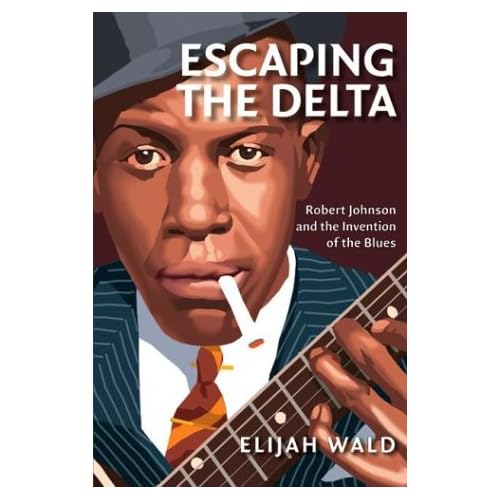
Escaping the Delta: Robert Johnson and the Invention of the Blues
please click image


According to Publishers Weekly;
In this combination history of blues music and biography of Robert Johnson, Wald, a blues musician himself (and author of Narcorrido), explores Johnson's rise from a little known guitarist who died in 1938 to one of the most influential artists in rock and roll. From the blues' meager beginning in the early 1900s to its '30s heyday and its 1960s revival, Wald gives a revisionist history of the music, which he feels, in many instances, has been mislabeled and misjudged. Though his writing sometimes reads like a textbook, and he occasionally gets bogged down in arcane musical references, Wald's academic precision aids him in his quest to re-analyze America's perception of the blues as well as in trying to decipher the music's murky true origins and history. Using a lengthy comparison of how white Americans and black Americans define the blues, Wald demonstrates how Johnson fit into the gray area between the two. Wald combines a short bio of Johnson with detailed analysis of his songs and the mysterious tales that are associated with him, giving a thorough account of Johnson's life, music and legend. The chapter on how white guitarists like Eric Clapton and Keith Richards interpreted who Johnson was and what he played really shows why he is not one of the many forgotten early 20th-century bluesmen. Wald's theories will no doubt cause passionate discussions among true blues aficionados, but the technical and obscure nature of much of his writing will make the book more of a useful reference resource.


The Washington Post gave this review;
The congressional proclamation of 2003 as the "Year of the Blues" enabled all manner of film, concert and educational initiatives meant to raise public awareness and appreciation of a genre that Congress asserts "is the most influential form of American roots music." While few would argue otherwise, some have responded to all this Capitol Hill pomp by raising questions about the relevance of the blues in the 21st century, when the music's audience has skewed overwhelmingly white, and its most rabid supporters appear to be the fraternity of beer-ad music supervisors.

Elijah Wald is not so interested in what the blues means in its year of distinction, but he is very interested in how it came to mean something other than what it once did. In Escaping the Delta, he sets out to explore "the paradox of [Robert] Johnson's reputation: that his music excited so little interest among the black blues fans of his time, and yet is now widely hailed as the greatest and most important blues ever recorded." Wald sees this paradox as symbolizing a larger gulf between the blues as heard by the black audience in its own time -- who knew it as hip, popular music -- and a later, mostly white audience that romanticized the blues as "the heart-cry of a suffering people." Not a book about Johnson per se, Escaping the Delta is a thoughtful, impassioned historical essay about that gulf.

Wald spends the first several chapters laying out the prewar musical terrain in which the blues came to the fore, through a synthesis of murkily understood received culture and the skills of those who refined the blues into a consciously commercial -- not naively folk -- art. After a quick sketch of Johnson's life and a critical analysis of his recordings, Wald carries the story through to the folk-revival "discovery" of the blues in the 1950s and the British Invasion's canonizing stamp of the 1960s, then adds a coda in which he seeks to lay permanently to rest the resilient myth that Johnson met the devil at a crossroads and sold his soul for other-worldly musicianship.

If the first half of the story sounds a lot more interesting than the second, Wald may feel the same way. Escaping the Delta is most engaged in the early going, as he dismantles genre stereotypes via endearing tidbits such as that blues singer Memphis Minnie's set list included George Gershwin's "Lady Be Good" and that Johnson rated the Sons of the Pioneers' "Tumbling Tumbleweeds" among his favorite songs. The book is much more hurried and polemically loose on the downhill side, as Wald takes broad swipes at an uptight blues "cognoscenti" and cites more dully familiar anecdotes such as the time the Rolling Stones sat at the feet of Howlin' Wolf. A professional musician himself, Wald can regale a listener with pinpoint comparisons of Johnson and Kokomo Arnold recordings that were each waxed more than 60 years ago. Such record-geek soliloquies can clear out a cocktail party, but here they serve a reader well. For Wald is rarely less than convincing when he makes his case for what Johnson and the prewar blues audience were actually hearing in their own day.

Often it wasn't the blues. Repeatedly Wald drives home the point that neither the musicians nor the audience frequenting a Clarksdale, Miss., juke joint in 1937 likely limited their taste to visceral fare like Johnson's "Cross Road Blues." They'd probably never heard it. In Wald's estimation, black listeners tended to prefer the smooth, urbane vocals of the far better-selling (in Johnson's day) blues pianist Leroy Carr, and if the jukebox selections noted by a 1944 field recording team are any indication, some may have liked the "sweet band" leader Sammy Kaye better than either.

In this fashion Wald does not seek to temper admiration for Johnson and his brilliant Delta generation. Rather he wants to rescue them from a historical narrative he sees as having been edited by record producers (the blues were good business), folklorists (the blues were authentic) and Rolling Stones fans (the blues were outlaw), each of which had a separate agenda for the music.

But Wald's focus on folkies and Stones freaks is problematic. For all his interest in the complexity of black-white, blues-pop musical exchanges in the pre-World War II South, he largely ignores that dynamic as carried through to the volatile postwar context. The South is full of tales of white kids who during the segregation era snuck away to off-limits black nightclubs, and of black kids who grew up with their ears tuned to the Grand Ole Opry. Wald is rightly sympathetic to the frustrations of the latter (quoting Bobby "Blue" Bland, "it was the wrong time and the wrong place for a black singer to make it singing white country blues") but oddly uninterested in the experiences of the former. He mentions Elvis Presley mostly in passing and scarcely touches on the impact of postwar black radio. Yet that generation's story had every bit as much to do with evolving perceptions (and misperceptions) of the blues as did any folk revivalism or Stones evangelism.

Nevertheless, the best studies inspire further study, and the best music books inspire further listening. Escaping the Delta could well do both. Blank spots aside, one comes away respecting Wald's view that far too much time has been spent wondering if Robert Johnson really sold his soul to the devil, and far too little time listening at the musical crossroads where he actually lived.


Blues Books @SqueezeMyLemon

Blues Music Books @Amazon.com


Friday, November 29, 2013

Radiolab does Robert Johnson

Crossroad at night

Radiolab (a show on NPR) did a broadcast about Robert Johnson.  It was a wonderful history lesson.

http://www.radiolab.org/story/199705-crossroads/


Tuesday, May 08, 2012

It's the Birthday of Robert Johnson

The Complete Recordings
The Complete Recordings [BOX SET] by Robert Johnson


Robert Leroy Johnson was born on May 8, 1911 and passed away on August 16, 1938. He was probably the most famous and influential of all the pre-war Delta blues musicians.

According to Wikipedia;
His landmark recordings from 1936–1937 display a remarkable combination of singing, guitar skills, and songwriting talent that have influenced generations of musicians. Johnson's shadowy, poorly documented life and death at age 27 have given rise to much legend.

I have many post here at SML about him and his music; you can just click on the Robert Johnson label to see other post about him.

Over the years a lot of scholarship has gone into understanding just who Robert Johnson was and how he created his body of work. Some good examples of books that may be of interest to fans of Robert Johnson are;

Robert Johnson: The New TranscriptionsRobert Johnson: The New Transcriptions


Searching for Robert Johnson: The Life and Legend of the King of the Delta Blues SingersSearching for Robert Johnson:
The Life and Legend of the
King of the Delta Blues Singers


Crossroads: The Life and Afterlife of Blues Legend Robert JohnsonCrossroads: The Life and Afterlife of Blues Legend Robert Johnson


Robert Johnson - Signature Licks: A Step-by-Step Breakdown of the Legendary Guitarist's Style and TechniqueRobert Johnson - Signature Licks: A Step-by-Step Breakdown of the Legendary Guitarist's Style and Technique (Guitar Signature Licks)


- = * = -


Robert Johnson @Amazon.com

Robert Johnson @SqueezeMyLemon


Monday, April 25, 2011

Last Fair Deal Gone Down [Remastered] ROBERT JOHNSON (1936)

Sometimes you just need a dose of Robert Johnson

It's the last fair deal goin' down,
last fair deal goin' down
It's the last fair deal goin' down, good Lord,
on that Gulfport Island Road1

Please, Ida Belle, don't cry this time
Ida Belle, don't cry this time
If you cry about a nickel, you'll die 'bout a dime
She wouldn't cry, but the money won't mine


Thursday, August 26, 2010

Robert Johnson : Traveling Riverside Blues

Wikipedia

"Travelling Riverside Blues" is a blues song written and recorded in Dallas, Texas by the bluesman Robert Johnson. Johnson's June 20, 1937 recording has a typical 12 bar blues structure (though as is common in downhome blues of this era, the length of each verse is in fact thirteen-and-a-half bars of 4/4), played on a single guitar tuned to open G, with a slide. It was first released on the 1961 compilation LP King of the Delta Blues Singers.


Robert Johnson is often considered the King Of The Delta Blues Singers.


Led Zeppelin's version


Eric Clapton's version


Friday, March 26, 2010

Robert Johnson - Sweet Home Chicago

"Sweet Home Chicago" is a popular blues standard in the twelve bar form. It was first recorded and is credited to have been written by Robert Johnson. Over the years the song has become one of the most popular anthems for the city of Chicago.


Sweet Home Chicago


Saturday, November 07, 2009

Robert Johnson - Crossroad Blues


According to Wikipedia;

"Cross Road Blues" is one of Delta Blues singer Robert Johnson's most famous songs. The lyrics plainly have the narrator attempting to hitch a ride from an intersection as darkness falls. But in close association with the mythic legend of Johnson's short life and death, it has come to represent the tale of a blues man going to a metaphorical crossroads to meet the devil to sell his soul in exchange for becoming a famous blues player. A fictionalized version of this legend was the basis for the film Crossroads (1986). It was also the basis of an episode of the television series Supernatural, which introduces the Crossroads Demon, which appears in later episodes.

Because of the historical significance of "Cross Road Blues," it was inducted into the Grammy Hall of Fame in 1998.

lyrics

I went to the crossroad

fell down on my knees

I went to the crossroad

fell down on my knees

Asked the Lord above "Have mercy, now

save poor Bob, if you please

Mmmmm, standin' at the crossroad

I tried to flag a ride

Standin' at the crossroad

I tried to flag a ride

Didn't nobody seem to know me

everybody pass me by

Mmm, the sun goin' down, boy

dark gon' catch me here

oooo ooee eeee

boy, dark gon' catch me here

I haven't got no lovin' sweet woman that

love and feel my care

You can run, you can run

tell my friend-boy Willie Brown

You can run, you can run

tell my friend-boy Willie Brown

Lord, that I'm standin' at the crossroad, babe

I believe I'm sinkin' down


Saturday, July 25, 2009

Blues Song In The Spotlight: Robert Johnson-I Believe I'll Dust My Broom


According to Wikipedia;
"Dust My Broom" is a blues standard originally recorded by Robert Johnson, the legendary Mississippi Delta blues singer and guitarist, on November 23, 1936 in San Antonio, Texas. It was released on the ARC Records label under the title of "I Believe I'll Dust My Broom. The song was later recorded and released on the Trumpet Records label by blues singer and guitarist Elmore James and became a surprise rhythm and blues hit in 1952. James version of the song was inducted into the Grammy Hall of Fame in 1998.

Robert Johnson's version of "I Believe I'll Dust My Broom", had been originally derived from Kokomo Arnold's adaption of "Sagefield Woman Blues". Elmore James took the song from Johnson.

James closely followed Johnson's lyrics and included a bottleneck guitar blues riff used frequently by Johnson but not on his recording of this song. James' first recording was in 1951 for Trumpet Records with Sonny Boy Williamson playing the harmonica and Odie Johnson on bass. James also recorded it under the title "Dust My Blues". He became closely associated with Johnson's song, using the melody for some of his own songs as well and playing it in bottleneck or slide guitar, while Johnson's original was finger picked.


Lyrics:

I'm gointa get up in the mornin
I believe I'll dust my broom
I'm gointa get up in the mornin
I believe I'll dust my broom
Girlfriend the black man you've been lovin
girlfriend can get my room

I'm gonna write a letter
telephone everytown I know
I'm gonna write a letter
telephone every town I know
If I can't find her in West Helena
she must be in East Monroe I know

I don't want no woman
wants every downtown man she meets
I don't want no woman
wants every downtown man she meets
She's a no good dooney
they shouldn't allow her on the street

I believe, I believe I'll go back home
You can mistreat me here babe,
but you can't when I'm back home

And I'm gettin up in the mornin
I believe I'll dust my broom
I'm gettin up in the mornin
I believe I'll dust my broom
Girlfriend the black man you been lovin
girlfriend can get my room

I'm gonna call up Chiney
see is my good girl over there
I'm gonna call up China
see is my good girl over there
I can't find her on Phillipine's island
she must be in Ethiopia somewhere


Robert Johnson: The Complete Recordings


Robert Johnson @Amazon.com


Saturday, July 18, 2009

Blues Song In The Spotlight: Robert Johnson- Malted Milk


lyrics:

I keep drinkin' malted milk , try'n to drive my blues away
I keep drinkin' malted milk, try'n to drive my blues away
Baby, you just as welcome to my lovin', as the flowers is in May

Malted milk, malted milk, keep rushin' to my head
And I have a funny, funny feelin', and I'm talkin' all out my head

Baby, fix me one more drink, and hug your daddy one more time
Keep on stirrin' my malted milk mama, until I change my mind

My door knob keeps on turnin', it must be spooks around my bed
My door knob keeps on turnin', must be spooks around my bed
I have a warm, old feelin', and the hair risin' on my head


Robert Johnson: The Complete Recordings


Robert Johnson @Amazon.com


Saturday, July 11, 2009

Blues Song In The Spotlight: Robert Johnson - 32 - 20 Blues


Lyrics :

If I send for my baby
and she don't come

If I send for my baby
man, and she don't come

All the doctors in Hot Springs
sure can't help her none

And if she gets unruly
thinks she don't wan do

If she gets unruly
thinks she don't wan do

Take my 32-20 now and
cut her half in two

She got a 38 special but I believe its much too light
I got a 32-20, got to make the camps alright

If I send for my baby
and she don't come

If I send for my baby
man, and she don't come

All the doctors in Hot Springs
sure can't help her none

I'm gonna shoot my pistol, gonna shoot my Gatlin gun
I'm gonna shoot my pistol, gotta shoot my Gatlin gun

You made me love you
now your man has come

Ah-oh
baby where you stay last night

Ah-ah
baby where you stayed last night

You got your hair all tangled
and you ain't talkin right

Got a 38 special boys, it do very well


Robert Johnson: The Complete Recordings


Robert Johnson @Amazon.com


Saturday, July 04, 2009

Blues Song In The Spotlight: Robert Johnson - Drunken Hearted Man


Lyrics:

I'm a drunken hearted man
my life seem so misery

I'm the drunken hearted man
my life seem so misery

And if I could change my way of livin'
it t'would mean so much to me

I been dogged and I been driven
eve' since I left my mother's home

I been dogged and I been driven
eve' since I left my mother's home

And I can't see no reason why
that I can't leave these no-goods womens alone

My father died and left me
my poor mother done the best that she could

My father died and left me
my poor mother done the best she could

Every man likes that game you call love
but it don't mean no man no good

Now, I'm the drunken hearted man
and sin was the cause of it all

spoken: Oh, play 'em now

I'm a drunken hearted man
and sin was the cause of it all

And the day that you get weak for no-good women
that's the day that you bound to fall


Robert Johnson: The Complete Recordings


Robert Johnson @Amazon.com


Saturday, June 27, 2009

Blues Song In The Spotlight: Robert Johnson - Dead Shrimp Blues


Dead Shrimp Blues

Lyrics:

I woke up this mornin
and all my shrimp was dead and gone
I woke up this mornin ooh
and all my shrimp was dead and gone
I was thinin about you baby,
why you hear me weep and moan

I got dead shrimp here
someone is fishin in my pond
I got dead shrimp here, ooh
someone fishin in my pond
I served my best bait baby
and I can't do that no harm

Everything I do babe you got your mouth stuck up
Hole where I used to fish, you got me posted up
Everything I do,
You got your mouth stuck up
And the hole where I used to fish baby
you've got me posted out

I got dead shrimp here
someone fishin in my pond
I got dead shrimp here
someone fishin in my pond
Catchin my goggle eyed perches
and they barbequein the bone

Now you take my shrimp babe
you know you turned me down
I couldn't do nothin, till I got myself unwound

You taken my shrimp
oohh know you turned me down
Babe, I couldn't do nothin, untill I got myself unwound


Robert Johnson: The Complete Recordings


Robert Johnson @Amazon.com


Saturday, June 20, 2009

Blues Song In The Spotlight: Robert Johnson - From Four Till Late


Lyrics:

From four till late
I was wringin my hands and cryin

From four till late
I was wringin my hands and cryin

I believe to my soul
that your daddy's Gulfport bound

From Memphis to Norfolk
is a thirty six hour ride

From Memphis to Norfolk
is a thirty six hour ride

A mans like a prisoner
and he's never satisfied

A woman is like a dresser
some man is always ramblin through its drawers

A woman is like a dresser
some man is always ramblin through its drawers

It cause so many men
wear an apron overhaul

From four until late
she get with a no good bunch and clown

From four until late
she get with a no good bunch and clown

Now, she won't do nothin
but tear a good mans reputation down

When I leave this town,
I'm 'onna bid you fare...farewell

When I leave this town,
I'm 'onna bid you fare...farewell

And when I return again
you'll have a great long story to tell


Robert Johnson: The Complete Recordings


Robert Johnson @Amazon.com


Friday, May 08, 2009

It's the Birthday of Robert Johnson

The Complete Recordings
The Complete Recordings [BOX SET] by Robert Johnson


Robert Leroy Johnson was born on May 8, 1911 and passed away on August 16, 1938. He was probably the most famous and influential of all the pre-war Delta blues musicians.

According to Wikipedia;
His landmark recordings from 1936–1937 display a remarkable combination of singing, guitar skills, and songwriting talent that have influenced generations of musicians. Johnson's shadowy, poorly documented life and death at age 27 have given rise to much legend.

I have many post here at SML about him and his music; you can just click on the Robert Johnson label to see other post about him.

Over the years a lot of scholarship has gone into understanding just who Robert Johnson was and how he created his body of work. Some good examples of books that may be of interest to fans of Robert Johnson are;

Robert Johnson: The New TranscriptionsRobert Johnson: The New Transcriptions


Searching for Robert Johnson: The Life and Legend of the King of the Delta Blues SingersSearching for Robert Johnson:
The Life and Legend of the
King of the Delta Blues Singers


Crossroads: The Life and Afterlife of Blues Legend Robert JohnsonCrossroads: The Life and Afterlife of Blues Legend Robert Johnson


Robert Johnson - Signature Licks: A Step-by-Step Breakdown of the Legendary Guitarist's Style and TechniqueRobert Johnson - Signature Licks: A Step-by-Step Breakdown of the Legendary Guitarist's Style and Technique (Guitar Signature Licks)


- = * = -


Robert Johnson @Amazon.com

Robert Johnson @SqueezeMyLemon


Saturday, May 02, 2009

Gluttony - Seven Deadly Sins

This is really hard - any suggestions?

“They’re Red Hot,” Robert Johnson
Well I guess he is a sucker for those tamales and can't get enough.

Hot tamales and they're red hot, yes she got'em for sale
She got two for a nickel, got four for a dime
Would sell you more, but they ain't none of mine

Loving Cup - Rolling Stones
Too much drink - can't stop

“Just one drink, and you’ll fall down drunk.”


Tuesday, March 24, 2009

Robert Johnson-Traveling Riverside Blues

You know what I'm talking about...

Robert Johnson-Traveling Riverside Blues


Copyright Wikipedia

"Travelling Riverside Blues" is a blues song written and recorded in Dallas, Texas by legendary bluesman Robert Johnson. Johnson's June 20, 1937 recording has a typical 12 bar blues structure, played on a single guitar tuned to open G, with a slide. It was first released on the 1961 compilation LP King of the Delta Blues Singers. The song has proved popular with more recent blues musicians.

Versions:

A verse was incorporated into Cream's "Crossroads", their 1968 version of Johnson's "Cross Road Blues".

English rock band Led Zeppelin's version of this song was recorded at the BBC studios on June 24, 1969, upon which Jimmy Page later dubbed extra guitar tracks. It was was broadcast four days later on John Peel's Top Gear show under the title "Travelling Riverside Blues '69". It is quite different from the original, and it is more a tribute to Robert Johnson than a straight cover. The song showcases a riff by Page (also in open G tuning), and in the lyrics Robert Plant quotes many Robert Johnson songs, such as "She studies evil all the time", from "Kind Hearted Woman Blues", and "Why don't you come on in my kitchen", from "Come on in My Kitchen" (which is heard during the song's solo). Conversely, parts of Johnson's "Travelling Riverside Blues" are used as lyrics in Led Zeppelin's "The Lemon Song", namely the "squeeze my lemon" sequence. It is likely that Johnson borrowed this himself, from a song recorded in the same year (1937) called "She Squeezed My Lemon".The line "she got a mortgage on my body and a lien on my soul" and reference to front teeth lined with gold at the end of the song are also from Johnson's original song.

The May 2008 issue of Uncut Magazine focused upon Zeppelin's 2008 reunion. A promotional CD attached to the magazine was titled "When the Levee Breaks: 15 classic tracks that inspired Led Zeppelin." The CD included the original "Travelling Riverside Blues" by Robert Johnson. Inside the magazine, the track commentary elaborated upon Zeppelin's version:

"Plant's infamous 'squeeze my lemon till the juice runs down my leg' line on Led Zep II's "The Lemon Song" was lifted from this '36 cut by the king of the Delta blues singers--although Page partly borrows the track's memorable riff from Howlin' Wolf's 'Killing Floor.'"

"Travelling Riverside Blues" can be found on the Led Zeppelin BBC Sessions album, on disc 1 of the Led Zeppelin Box Set, and on the expanded Coda album from The Complete Studio Recordings box set. It was interest from US radio interviewers and fans during Page's Outrider tour that originally led him to negotiate with BBC Enterprises for the song's release.A promotional video clip was also released in 1990, with outtake footage from the band's 1976 concert film, The Song Remains the Same. The song reached number seven on the Billboard Top Rock Tracks Top 50 chart in November 1990, culled from national album rock radio airplay reports.

Eric Clapton covered this song, along with several other Robert Johnson classics, on his 2004 album, Me and Mr. Johnson.

Myles Kennedy has sung and played the song with his band Alter Bridge at live shows in 2007.

Dion covered this song on his 2006 Grammy-nominated album "Bronx in Blue".

Lyrics:

If your man get personal, want you to have your fun
Just come on back to Friars Point, mama, and barrelhouse all night long
I got womens in Vicksburg, clean on into Tennessee
But my Friars Point rider, now, hops all over me
I ain't gon' to state no color, but her front teeth crowned with gold
I ain't gon' to state no color, but her front teeth is crowned with gold
She got a mortgage on my body, now, and a lien on my soul
Lord, I'm goin' to Rosedale, gon' take my rider by my side
We can still barrelhouse baby, on the riverside
Now you can squeeze my lemon 'til the juice run down my...
(spoken) 'til the juice rune down my leg, baby, you know what I'm talkin' about
You can squeeze my lemon 'til the juice run down my leg
(spoken) That's what I'm talkin' 'bout, now
But I'm goin' back to Friars Point, if I be rockin'to my head


Saturday, January 10, 2009

Hip Hop Blues

Mix Master Mike & Robert Johnson from Scratch


Saturday, December 13, 2008

Robert Johnson - Sweet Home Chicago


According to Wikipedia.
"Sweet Home Chicago" is a popular blues standard in the twelve bar form. It was first recorded and is credited to have been written by Robert Johnson. Over the years the song has become one of the most popular anthems for the city of Chicago despite ambiguity in Johnson's original lyrics.

Johnson recorded the song during his first recording session in November 1936, and it was released on Vocalion Records (Recording Number 03601).He gives a stirring performance, with a driving guitar rhythm and a high, near-falsetto vocal. It was a limited release race record, and was not a big-seller. The song's popularity grew only after Johnson's death in 1938.

In fact, the song is a variation of "Kokomo Blues", a song popularised by Scrapper Blackwell, Madlyn Davis and most notably by James Arnold. Arnold's version of the song, which he recorded in 1934 as "Old Original Kokomo Blues", was such a success that he changed his performing name to Kokomo Arnold.

The earliest recorded version of the song by Scrapper Blackwell in 1928 referred to Kokomo, Indiana, a city well known to the Indianapolis-based guitarist. Kokomo was famous for the number of traffic lights. It was known to truckers as "stop light city" and to blues singers after Arnold as "level light city".


Lyrics:

Oh, baby, don't you want to go?
Back to the land of California, to my sweet home Chicago.

Oh, baby, don't you want to go?
Back to the land of California, to my sweet home Chicago.

Now one and one is two, two and two is four,
I'm heavy loaded, baby, I'm booked I got to go.
Cryin', baby, honey, don't you want to go?
Back to the land of California, to my sweet home Chicago.

Now, two and two is four, four and two is six,
You gon' keep on monkeyin' 'round here friend-boy
you gon' get your business all in a trick, but I'm cryin'
Baby, honey, don't you want to go?
Back to the land of California, to my sweet home Chicago.

Now, six and two is eight, eight and two is ten,
Friend-boy she trick you one time, she sure gon' do it again
But I'm cryin', hey, hey, baby, don't you want to go?
To the land of California, to my sweet home Chicago.

I'm goin' to California from there to Des Moines, Iowa,
Somebody will tell me that you need my help someday, cryin'
Hey, hey, baby, don't you want to go?
Back to the land of California, to my sweet home Chicago.


Monday, October 13, 2008

Vanity Fair: Portrait of a Phantom

Vanity Fair.com's culture and entertainment section has a very interesting article on Robert Johnson titled Portrait of a Phantom Searching for Robert Johnson. It conicals the control for the rights of Johnson's music and even his images.

The article does a good job of reporting on the few know images of Johnson and how they were found and where they come from. Specifically the article tells the story of Zeke Schein and a photo that he bought on eBay.

The article also gives details from those who were inspired by Robert Johnson's music over the years. For example, Eric Clapton is quoted;

“At first the music almost repelled me, it was so intense and this man made no attempt to sugarcoat what he was trying to say, or play,” Clapton writes in his recently published memoir, Clapton: The Autobiography.
Thanks to Chal of Chal's Juke Joint for turning me on to this article.


Wednesday, July 23, 2008

Blues Postage Stamps

I've been trying to put together a post on blues postage stamps. You know, a little something something for the philatelists who read SML. Oh, and the bluesmen just call them stamp collectors.

But my ability to collect pictures of the blues stamps is not so good. I know that there are many more stamps then the few I have posted here.

Here is what I have come up with so far, I will update my collection when I find more photos of blues stamps.

If you know of any photos that I can post here let me know in a comment.

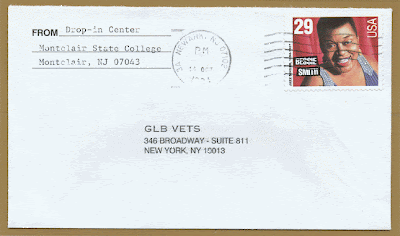
Bessie Smith Postage Stamp

Muddy Waters Postage Stamp

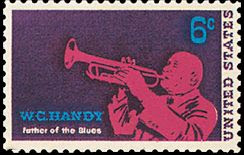
W.C. Handy Postage Stamp

Ma Rainey Postage Stamp

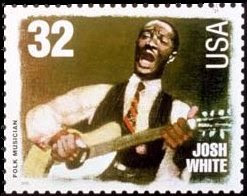
Josh White Postage Stamp

Robert Johnson Postage Stamp


The Robert Johnson Postage Stamp (I wish I could find a better image) is a really cool one because of the contraversy that sourounds it. It was made using the photo booth image (read all about it here). According to the article;
The cigarette that dangles from Johnson’s lips was famously removed at the order of the USPS, an interesting change that is analyzed in great detail in Patricia Schroeder’s excellent 2004 work Robert Johnson, Mythmaking, and Contemporary American Culture. In order to accommodate the dimensions of the stamp, Johnson’s guitar and hand are also moved slightly, and the drapery background of the original portrait becomes a wall of shingles in stamp designer Julian Allen’s version.
And others also called foul, and claimed that the postal service was Sanitizing History On a Postage Stamp.
In 1994 the United States Postal Service removed the cigarette from its picture of blues great Robert Johnson so no one would doubt where it stood on smoking.